
It’s often all too easy to get stuck in the weeds when working on challenging product developments. Methodical exercises, like a Preliminary Hazard Analysis, provide a valuable opportunity to take a step back and uncover important issues that may otherwise be overseen.
Autoinjectors
Most people have heard of the EpiPen️, a specific autoinjector used to inject adrenaline. But these devices can be used to inject other drugs too.
They are essentially spring-loaded prefilled syringes which automate the injection process, making them very easy to use. Simply pop off the cap, press and hold it down on the injection site, and wait for certain cues before removing it.
Around 6 months ago I was introduced to a drug called Dupilumab to treat my eczema. The drug is a biologic drug, and is therefore supplied in an autoinjector which I need to keep in the fridge.
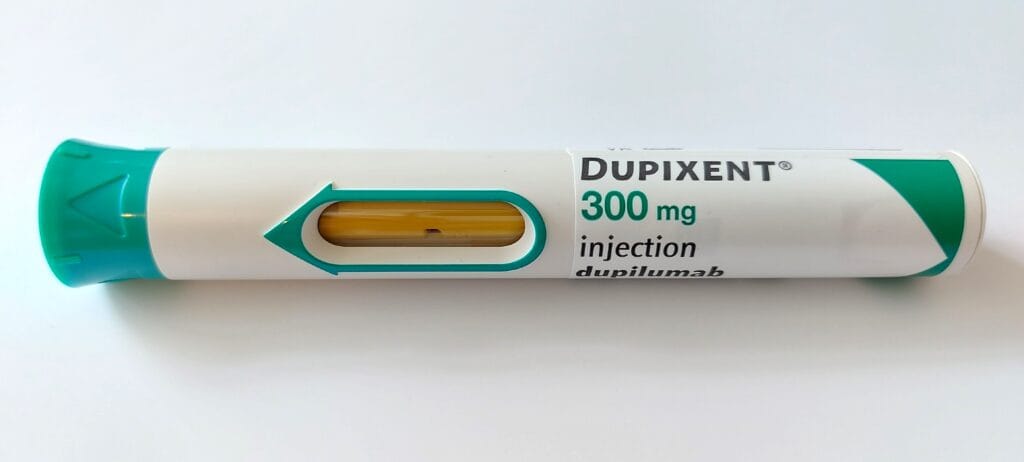
A use-related hazard
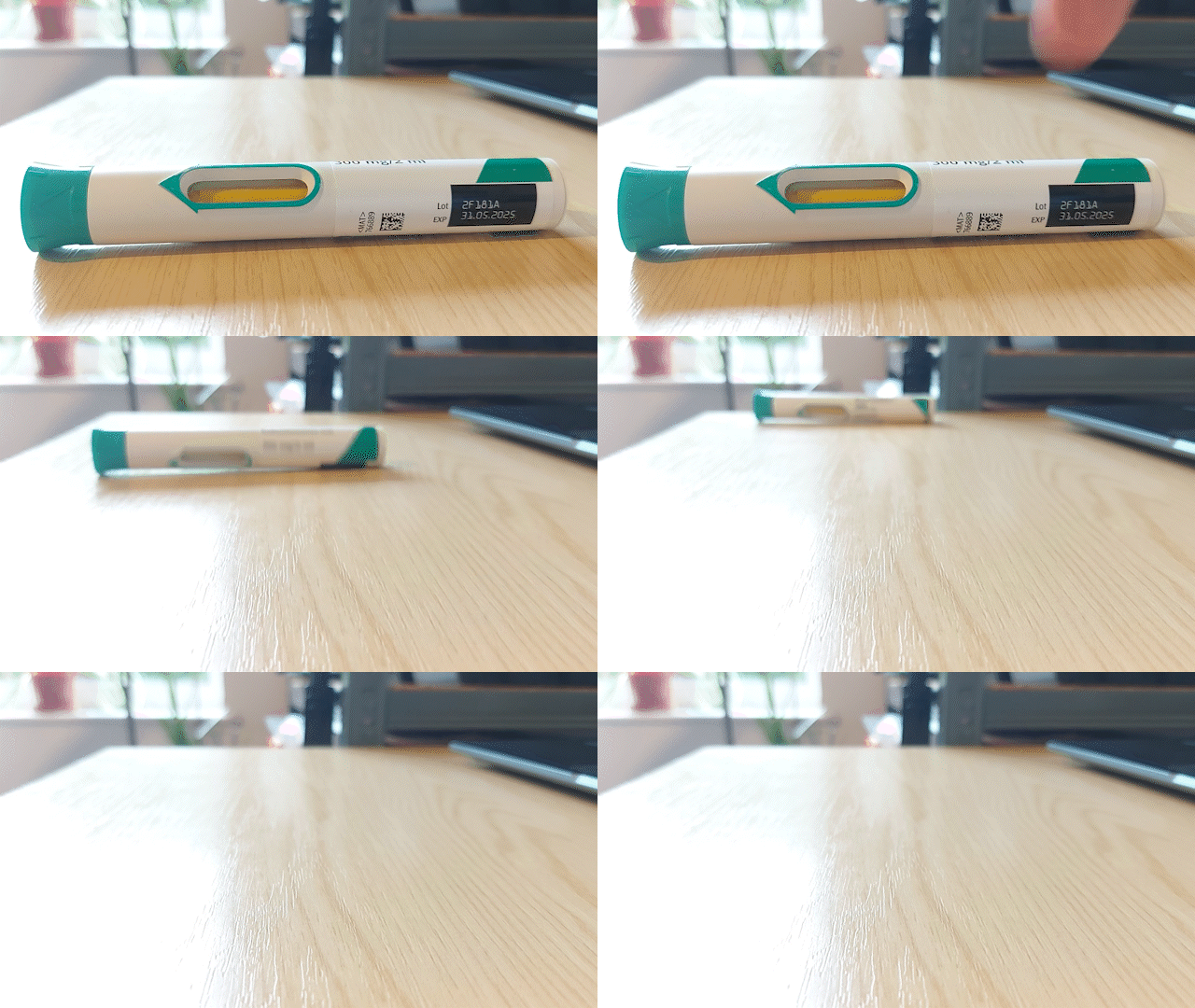
I take it out of the fridge the day before injecting to warm up. One concern I have is how a slight knock sets it rolling.
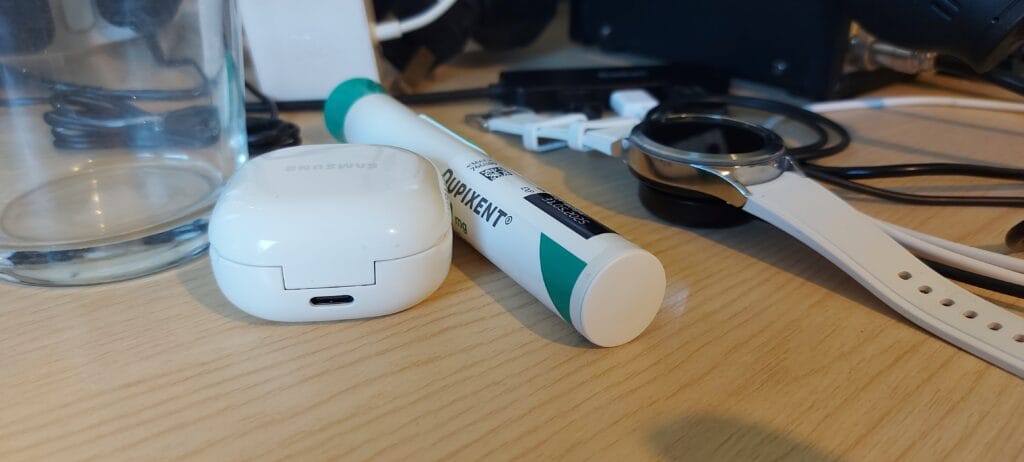
I find myself nestling it between other objects on my desk to prevent it from accidentally rolling off my desk.
This reminded me of a simple exercise, performed in the early stages of medical device development, to catch use-related hazards just like this one, so they can be addressed by design changes whilst still relatively easy to do so.
The Preliminary Hazard Analysis
A Preliminary Hazard Analysis is a valuable tool for helping to identify and evaluate use-related hazards early. The two-step process involves:
- Identifying critical tasks. Imagine yourself in the user’s shoes, and in the environment they’re in. Then step through the tasks performed when using your device, identifying critical ones where a hazard could arise.
- Evaluating the risk posed by these hazards, using a tool like an FMEA. For each hazard, brainstorm their possible root causes, then evaluate the risk they each pose.


Tips:
- It’s a nice idea to add a justification column, to record the reasoning used to arrive at your scores, as it’s all too easy to forget what they were in the future.
- If you have an existing product which is similar, it’s only fair to score the severity associated with harms in the same way across your product line.
- When assembling your analysis team, include a wide variety of people with relevant expertise, from those who closely represent the end user, to those designing the device. This will help you to capture as many hazards as possible, as well as evaluate their harms appropriately.
- Create one sooner rather than later. Speaking from experience, you will probably learn things you wish you’d known sooner!
- Use it as a project management tool.
- Let it guide you. Focus your efforts on addressing those pesky unacceptable risks.
- It’s a live document, so make sure to update and iterate it along with your evolving design, and hopefully watch the number of unacceptable risks reduce.
- Use it to help you clearly communicate the areas of risk with other project stakeholders.
Summary
After running through this exercise, for this specific hazard, the risk to the patient seems low enough to be acceptable.
- The probability of the hazard occurring is remote. The autoinjector only rolls if knocked, and some quick drop tests on a used autoinjector resulted in no visible damage, with the cap staying on.
- The harm caused by the hazard is low too. Any delay in treatment of up to a couple of weeks will not have a significant impact on the patient’s long term health, and whilst a new autoinjector might need to be prescribed, no medical intervention is needed from a professional should the hazard occur.
Please take this conclusion with a huge pinch of salt! This evaluation was performed by a sole mechanical engineer, and was only intended to demonstrate how to perform this type of exercise.
I’d like to finish by mentioning the device already has 4off ‘anti-roll’ bumps, which could be made slightly bigger with minimal effort. The change would be a simple metal-off injection mould tool modification, and shouldn’t adversely impact other areas of functionality either.

On a personal note, I’ve been blown away by how well Dupilumab works! Whilst it’s not a cure, after decades of little to no improvement in my eczema, this drug has resulted in a step change.
No more fortnightly blood tests due to being on immunosuppressants. Biologic drugs are the future!
Appendix
When it comes to managing risk on medical device development projects, ISO 14971 provides a general framework, with IEC 62366 specifically covering how to manage risks associated with human factors. Standards aren’t the easiest documents to read – luckily the FDA has published written guidance on how to apply human factors to medical devices in simple language. It includes a section on preliminary analyses.
Whilst analytical evaluations, like a Preliminary Hazard Analysis, are useful in the early stages of product development when you don’t quite have a prototype which is easily testable, once you do, perform simulated-use testing. The proof of the pudding is in the eating.